Mostrando las entradas con la etiqueta Nepal. Mostrar todas las entradas

viernes, 1 de mayo de 2015

La lucha de poder entre China e India tras el terremoto en Nepal

La reacción de los gigantes de Asia tras el terremoto en Nepal muestra una creciente disputa regional. ¿Por qué las dos naciones más pobladas del mundo luchan por influir en una de las más pobres? 7 horas "Devastación casi total" encuentran equipos de rescate cerca del epicentro del terremoto de Nepal
Soutik Biswas BBC, Delhi
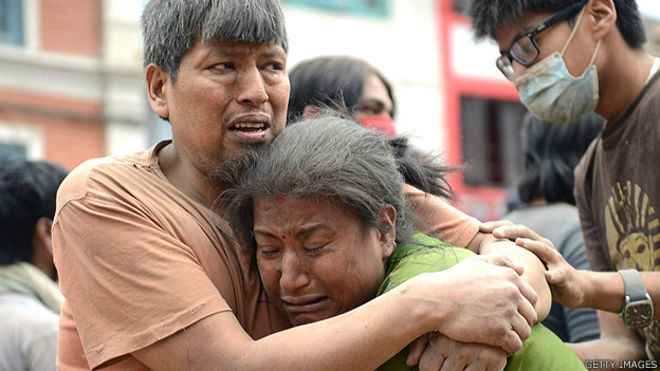
Sobrevivientes del terremoto en Nepal 
El terremoto del sábado en Nepal dejó más de 6.200 muertos.
nepal La celeridad con que India y China reaccionaron al terremoto en Nepal dejó al descubierto una vez más la lucha de influencias que los dos gigantes de Asia libran en el pequeño reino del Himalaya.
Tras la catástrofe, que dejó más de 6.200 muertos, India envió velozmente a Katmandú, la capital nepalesa, aviones con fuerzas especializadas en emergencias, médicos, alimentos, medicinas y equipos de rescate.
China, por su parte, mandó expertos en rescate con perros adiestrados, equipos médicos, mantas, generadores y carpas.
Los líderes de ambas naciones, Narendra Modi y Xi Jinping, no perdieron tiempo en transmitir su pésame. "Para muchas personas en nuestro país, los nepaleses son parte de nuestro pueblo", dijo en su mensaje radial mensual el domingo.
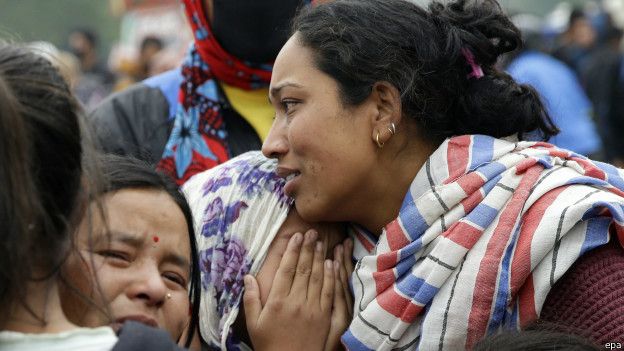
La ayuda de China e India no tardó en llegar a Nepal tras el terremoto.
La lucha de influencias no es nueva, pero parece haber escalado en los últimos años.
Los vínculos de Nepal con India son profundos y, según algunos, "esquizofrénicos". Muchos en Nepal, incluyendo al partido comunista maoísta, la tercera fuerza política del país, han criticado la relación "semicolonial" con India y lo que consideran el constante "expansionismo" de Nueva Delhi.
También argumentan que la población de Nepal, uno de los países más pobres del mundo, se ha convertido en un "mercado esclavo", en el que comerciantes indios controlan gran parte de de la economía.
Los tratados que regulan el reparto del agua en la región han sido especialmente blanco de críticas. Muchos aseguran que los acuerdos han perjudicado a Nepal y beneficiado los proyectos de irrigación de aguas de India.
Los partidos de oposición en Nepal suelen apelar al nacionalismo de la población con una fuerte retórica contraria a Nueva Delhi. Y los maoístas califican a los partidos tradicionales "agentes de India".

De Delhi a Katmandú

India está geográfica, lingüística y culturalmente mucho más cerca de Nepal que de China.
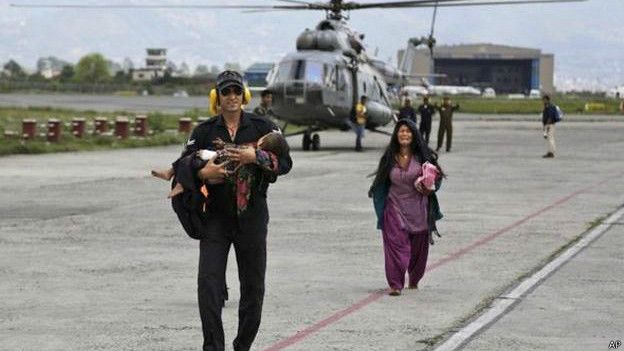
Piloto de India transportante un niño herido
Pilotos de India han estado transportando heridos en Nepal.
"India ha jugado un papel tan importante en la política de Nepal como los partidos nepaleses", explicó Michael Hutt, experto en Nepal de la Universidad de Londres.
Los ciudadanos nepaleses siguen integrando el regimiento de los Ghurkas en el ejército indio. Y la principal fuente de armas del ejército nepalés es Nueva Delhi.
El hecho de que ambos países tengan una política de fronteras abiertas es crucial para entender que el principal interés indio en Nepal es la seguridad, según Prashant Jha, autor del libro "Batallas por una nueva república: una historia contemporánea de Nepal".
"Nueva Delhi necesita un gobierno amigable en Katmandú para evitar que China gane espacio e influencia", agregó Jha.
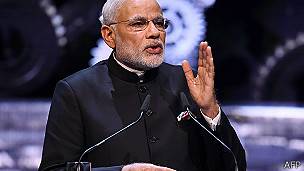
Narendra Modi
El primer ministro de India, Narendra Modi, dejó en claro que las relaciones con Nepal son una prioridad.
No es sorprendente entonces que India haya respondido tan rápidamente ante la catástrofe de la nación vecina.
"Nepal es crucial para India y ocupa un lugar especial en su pensamiento. No es posible comparar esta relación con la de China", señaló Harsh V. Pant, profesor de relaciones internacionales de Kings College, en Londres.
"La respuesta de India al terremoto habría sido importante de cualquier forma", apunta.

¿Qué busca China?

Sin embargo, la influencia de China en la región está aumentando rápidamente. El año pasado Pekín superó a Nueva Delhi y se convirtió en el principal inversor extranjero en el reino del Himalaya.
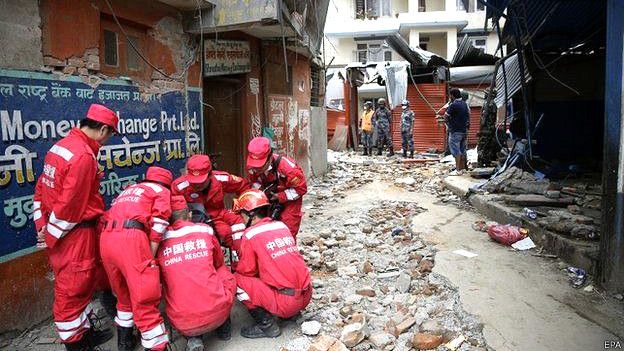
Fuerzas de rescate de China en Nepal
China envió a Nepal personal especializado en rescates, carpas y equipo médico.
El gobierno chino invirtió en caminos, plantas generadoras, transporte e infraestructura y el intercambio entre ambos países sigue incrementándose.
Miles de tibetanos han ido a Nepal en busca de trabajo y Pekín ha dejado en claro al gobierno nepalés que debe controlar a los activistas tibetanos en su territorio.
Nepal repatría a la fuerza a territorio chino a muchos tibetanos en incumplimiento de reglas internacionales, según un informe de la ONG Human Rights Watch de 2013.
Se habría pedido explíctamente a Taiwán no participar en la asistencia humanitaria tras el terremoto, según un reporte, aunque no se sabe si la razón es una intervención china.
"Nepal también se ha vuelto más listo al manejar su relación con los dos gigantes de Asia", dijo Pant.
¿Está el creciente papel de China en Nepal causando inquietud en India?
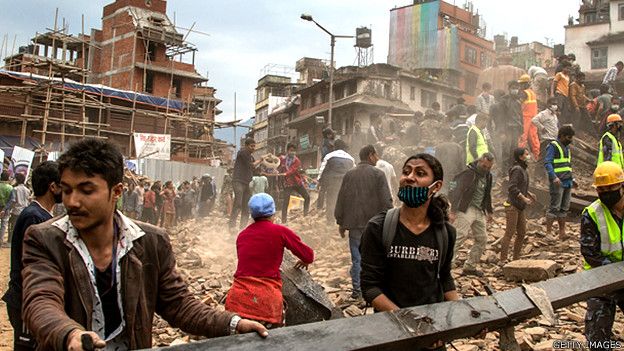
Tareas de rescate en Katmandú
El terremoto afectó a al menos ocho millones de personas, según Naciones Unidas.
El primer ministro indio Narendra Modi ha hecho de las relaciones regionales una prioridad de su política exterior. India, claramente, quiere minimizar la influencia de China localmente.
No es de sorprender entonces que Nueva Delhi haya reaccionado como lo hizo al devastador terremoto de Nepal.
"En India existe la sensación de que no debe permitirse a Katmandú un mayor acercamiento con China", le dijo el profesor Pant a la BBC.
"La sensación en Nueva Delhi es que China ya ha hecho demasiadas incursiones en Nepal".
 http://www.bbc.co.uk/mundo/noticias/2015/05/150429_nepal_india_china_am

Contenido relacionado

lunes, 27 de abril de 2015

Death toll tops 4,200 in Nepal earthquake

Asia & Pacific
Death toll tops 4,200 in Nepal earthquake
 April 27 at 4:01 PM   
 In the chill of a post-rain morning, Punya Ram Kawang, a teacher, was standing before a mound of rubble in his torn neighborhood Monday, trying to figure out how to grieve.
His house was a pile. His neighbor, who is 70, was wailing and wiping her eyes with the hem of her sari. Around the corner, four temples of his city — revered, loved by all — were gone. In the heart of this UNESCO-honored place, a swirl of bricks engulfed a precious idol. Mighty stone lions now guarded steps to nowhere.
“I’ve lost count of how many things to weep about,” Kawang said. “What do I do? Do I cry over the ancient temples? Do I cry about my neighbors and friends or my own home which is now in ruins?”
Three days after the terrible earthquake shook Nepal — killing more than 4,200 people, toppling centuries-old monuments and engulfing Mount Everest’s base camp in an avalanche — the scope of the devastation was becoming clearer.
International aid was beginning to arrive, and rescue crews in Nepal expanded helicopter searches Monday into mountain villages believed to be the worst hit from the powerful earthquake, where scores were feared dead.
Drone video shows devastation in Nepal(0:56)
Drone video released on Monday shows devastation in parts of Nepal, three days after a 7.8 magnitude earthquake killed thousands of people and left scores more injured. (Reuters)
“The army ramped up efforts to rescue in remote areas and were able to bring few survivors today,” an official at Nepal’s National Emergency Operation Center said. In some areas, “only houses that have concrete pillars still stand. Everything else is destroyed.”
Throughout the country, food, water and medicine ran low, and makeshift tent camps sprang up for those whose homes were lost, and those too scared to return home to unsteady structures. Hospitals continued to overflow with patients. Electricity and telephone service was sporadic in Kathmandu. Smoke from mass cremations wafted over the devastation after skies cleared following torrential rain.
Aftershocks continued. In Kathmandu, nearly 10,000 displaced people set up a tent city in the middle of a large soccer field and army grounds, colorful trekking tents belying the grim nature of their circumstances.
The place had only three filthy bathrooms, according to pharmacist Lok Bahadur Khadka, who had taken refuge there with his extended family — 30 people living under one fairly large tent. Nepalese army soldiers brought food — a potato dish and crunchy puri, a fried bread. The dispossessed residents pushed and shoved each other for the hot meal, their first since Saturday.
A Pentagon spokesman, Col. Steve Warren, said Monday that the U.S. military has two cargo planes on the way to Nepal, with about 130 personnel. They include a U.S. disaster team and two urban search-and-rescue teams, one of them from Fairfax County, Va.
A 26-person U.S. Army Special Forces team, which was in the country for a joint training mission when the quake took place, will now be reassigned to help quake victims, partly in the Everest region. Rescuers there were able to bring down dozens of climbers who had been trapped in camps above the site of a deadly avalanche Saturday that killed at least 19. More remain missing.
Among those killed in the Everest region were at least four U.S. citizens, according to the State Department, including one who had not previously been identified. They were listed as Dan Fredinburg, a Google executive from the San Francisco Bay area; Marisa Eve Girawong, a physician’s assistant from Seattle; Thomas Ely Taplin, a filmmaker from Colorado; and Vinh B. Truong.
Sitanshu Kar, a spokesman for India’s Defense Ministry, said on Twitter that Indian air force pilots have been flying rescue sorties over the country’s rugged terrain with their Nepalese army counterparts, dropping supplies and ferrying out more than 100 people. Several other nations have also provided aid, including China, Pakistan, Sri Lanka, Bangladesh, Israel and the European Union.
Kathmandu’s small airport — the main lifeline for the capital — struggled to handle the influx of flights, and many workers were not at their posts: either casualties of the quake or dealing with their own aftermath. Thousands more crowded in, hoping for a flight out. Planes brought sobering reminders that the full reckoning of the tragedy is not over: cadaver-sniffing dogs from India and equipment from Europe and elsewhere for field hospitals.
About 30 of Nepal’s 75 districts, mostly in the western and central regions, have suffered damage in the quake. But communication remained difficult, complicating assessments on the scope of the needs, according to Save the Children, an international aid group. Nearly 1 million children have been affected in the disaster, according to the United Nations Children’s Fund, and many of them are sleeping outside in the cold and rain with their parents.
In Kathmandu, the fifth-century Pashupatinath Temple became a scene of mass cremation; several pyres along the Bagmati River filled the air with the smell of burning flesh and incense. Relatives gathered around their loved ones, with one woman collapsing when the body of her brother was brought in on a bier. “My little brother was not even married, and now you are taking him away?” she wailed.
The temple has performed 286 cremations since the earthquake, with dozens more to complete, according to Shambu Prasad Poudel, the duty officer for the cremation ground’s welfare office.
“We do not have enough labor, management or coordination of the cremation activities,” he said. “The numbers are overwhelming.”
Many of the mourners did not wait for the temple, merely wading out into the river mud and burning the bodies themselves, he said.
The historic temple managed to withstand Saturday’s devastating earthquake, even as portions of the country’s historic sites did not. In Kathmandu, Durbar Square was wrecked, and the landmark Dharahara tower fell.
In Bhaktapur, four of the temples in its majestic Durbar Square — built by Nepali kings — collapsed, leaving heaps of rubble strewn with priceless carvings of elephants and lotus blossoms. Many spectators came to see the damage Monday, surveying it with their hands on their cheeks, some silently weeping. For the Nepalis, these losses were simply unimaginable.
“Any time I see it, it feels like my heart has stopped beating,” said Rajesh Pradhan, 47, who owns a small cafe at the square. “Hundreds of years, gone. This earthquake has cut off the right arm and the left arm of Nepal’s tourism industry. How will we rebuild?”
Nepal, one of the world’s poorest countries, has long depended upon tourist dollars from Mount Everest climbers and others visiting the heritage sites to boost its economy — 800,000 foreigners visited in 2013, according to the Tourism Ministry.
In the lanes of homes near the temple complex, Kawang, the teacher, led a group of volunteers looking for those still trapped, although they had slim hopes of finding anybody alive.
They had rescued a young man Sunday and had gone on to pull out 22 bodies so far. Armed with saws, shovels and metal rods, they moved through the street — past drooping power lines still wet from the night rain — toward a mound. There, the faintest contours of a hand was visible. The 23rd.
“Everywhere around me I see destruction,” Kawang said. “I have lost everything. But I have to remind myself I have a social responsibility too. I can’t sit holding my head in horror forever.”
Gowen reported from Itanagar, India. Anup Kaphle, Missy Ryan, Carol Morello and Brian Murphy in Washington and Daniela Deane in London contributed to this report.
Read more:
Rama Lakshmi has been with The Post's India bureau since 1990. She is a staff writer and India social media editor for Post World.
Annie Gowen is The Post’s India bureau chief and has reported for the Post throughout South Asia and the Middle East.

http://www.washingtonpost.com/world/rescue-crews-expand-helicopter-sorties-to-reach-remote-villages/2015/04/27/e44280c2-ec63-11e4-8050-839e9234b303_story.html
, , , 

BBC MUNDO Noticias - Cómo científicos "previeron" el terremoto de Nepal

Lunes, 27 de abril de 2015
Noticias principales
  • Cómo científicos "previeron" el terremoto de Nepal
    Hace apenas unas semanas Laurent Bollinger, de la Comisión de Energías Alternativas de Francia, y sus colegas descubrieron un patrón para los sismos en Nepal mientras analizaban la principal falla del país.
  • La silenciosa "revolución" económica de Corea del Norte
    El país más hermético del planeta está experimentando una gradual apertura económica. BBC Mundo analiza los cambios que están teniendo lugar desde la llegada al poder de Kim Jong-un en 2011.
  • Fotos aéreas de una Cuba nunca vista
    El fotógrafo lituano Marius Jovaiša se convirtió en el primer artista que toma imágenes desde el aire en Cuba. BBC Mundo te muestra algunas de sus impresionantes imágenes.
Tecnología
Salud
  • La ciencia detrás de los antojos
    Ya sea chocolate, queso o papas fritas al curry, desear una comida favorita es algo que todos hemos experimentado. ¿Por qué? Veronique Greenwood investiga.
Ciencia
Cultura y sociedad
Economía
  • Los 5 Emiratos Árabes que quizá no conoces
    Abu Dhabi y Dubái son sólo dos de los siete territorios que forman los Emiratos Árabes Unidos. El autor iraní Marcus George estuvo explorando para la BBC cuáles son esos otros emiratos desconocidos.
Deportes
  • El secreto de Chicharito está en la arquitectura de su cerebro
    El mexicano Javier Hernández ha pasado del olvido a ser la figura del momento de un Real Madrid que aspira a los títulos de la Liga en España y la Champions. Pero ¿cómo ha podido el mexicano lograr esa transformación?

    Contenido relacionado

    Fotos aéreas de una Cuba nunca vista

    • 27 abril 2015
    El fotógrafo lituano Marius Jovaiša consiguió algo que parecía imposible cuando se lo propuso: convencer a las autoridades de Cuba para que le dejasen fotografiar la isla desde el aire, algo que no había hecho nadie antes.
    La tarea le llevó cinco años y un gasto de US$1 millón. Ahora ha visto la luz su libro Unseen Cuba ("La Cuba nunca antes vista").
    "Quería convertirme en el primer artista en fotografiar Cuba desde el aire", dice Jovaiša, que ha publicado libros similares sobre México y Belice.
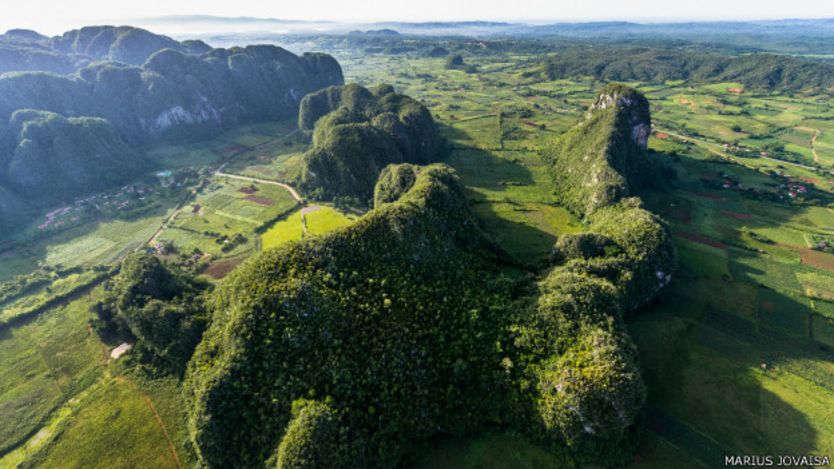
    "Me propuse expandir mis horizontes a un sitio en el que ningún artista hubiera tomado fotos aéreas", agrega el fotógrafo. Aquí, una imagen de los mogotes, montes de piedra caliza con forma de cono y cubiertos de vegetación, en Pinar del Río, en el occidente de la isla.
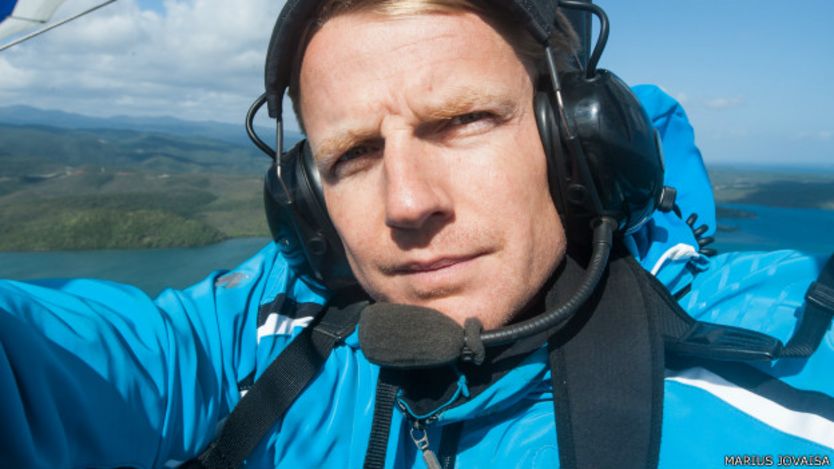
    Jovaiša tomó sus fotos en Cuba desde un ultraligero que él mismo compró para la ocasión. Ahora espera recuperar el dinero que invirtió con la venta de su libro.
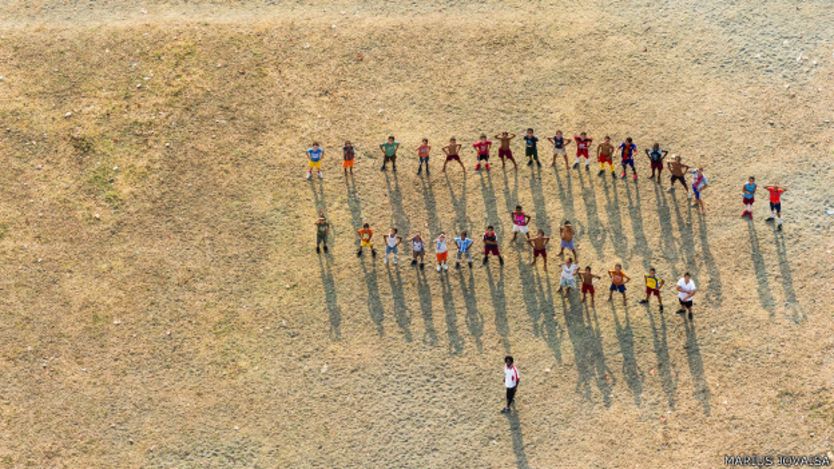
    En esta imagen, tomada en el este de la isla, unos niños juegan al béisbol, el deporte nacional.
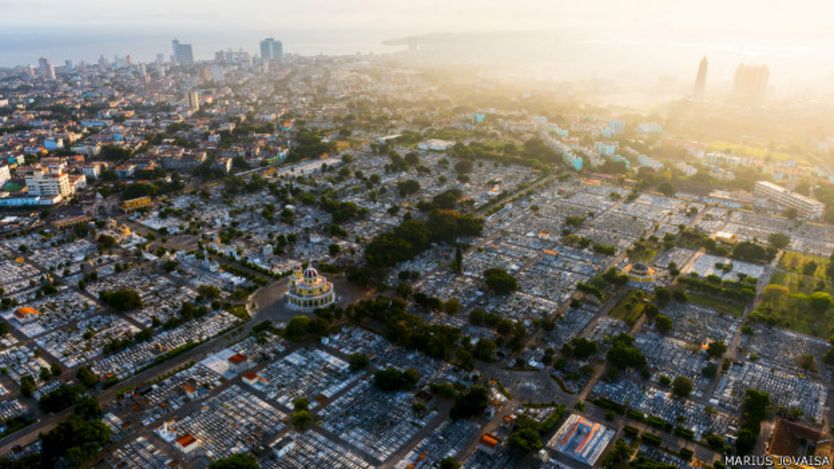
    El fotógrafo lituano dice que lo más complicado fue convencer a las autoridades de la isla de que su libro no tenía un fin político y de que él no tenía ninguna relación con los servicios de inteligencia de un país extranjero. En la imagen el cementerio de Cristóbal Colón, en La Habana.
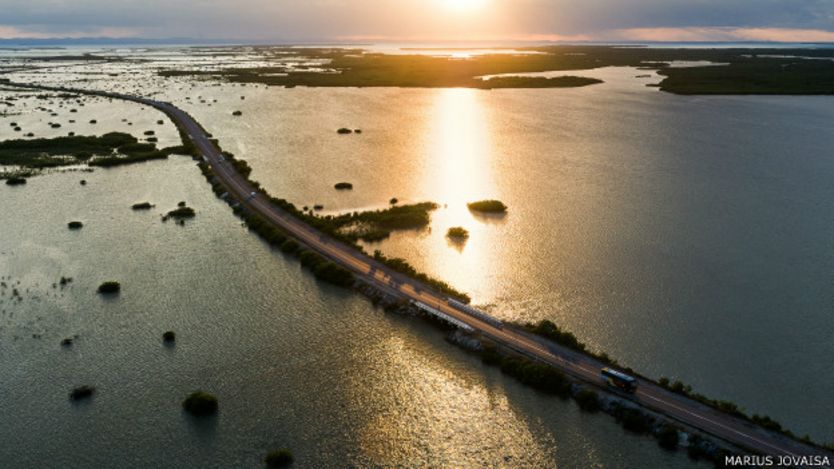
    Jovaiša dice que las autoridades le entregaron un mapa con las zonas que podría sobrevolar, pero poco a poco fueron abriendo la mano y pudo tomar fotos de ciudades, algo que en un principio le habían prohibido. En esta foto el sol se pone en la carretera El Pedraplén, que conduce al área turística del Cayo Las Brujas (centro).
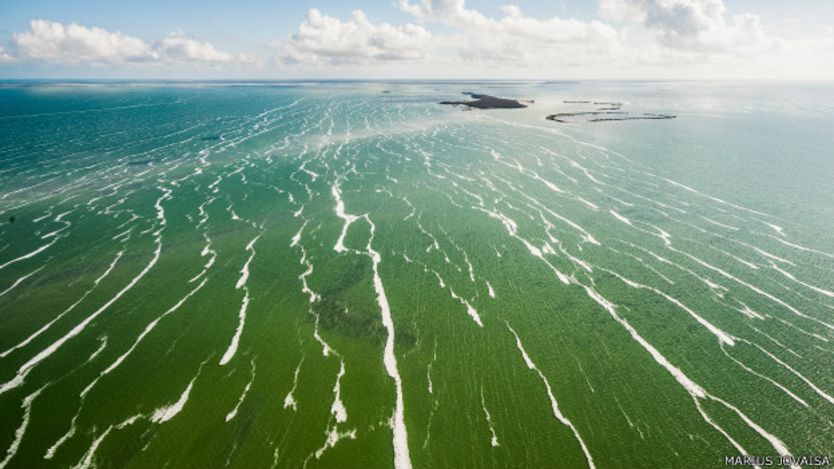
    Los corales de Jardines del Rey (en la costa norte) son una atracción para submarinistas que visitan la isla.
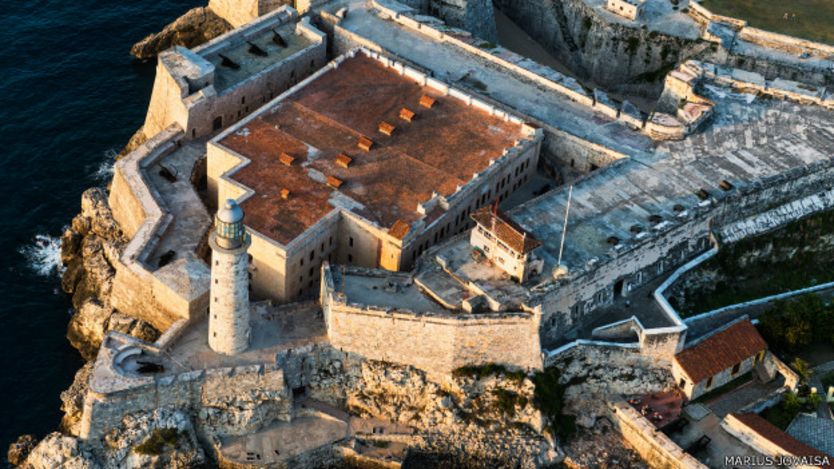
    Consiguió convencer a las autoridades gracias a su persistencia, explica. "Visité la isla varias veces en estancias de un par de semanas, promoví mi idea, organicé actividades como una exhibición de mis fotos en La Habana Vieja...", relata. Esta es una foto del Castillo del Morro, construido por los españoles en 1589 a la entrada de La Habana para contener los ataques piratas.
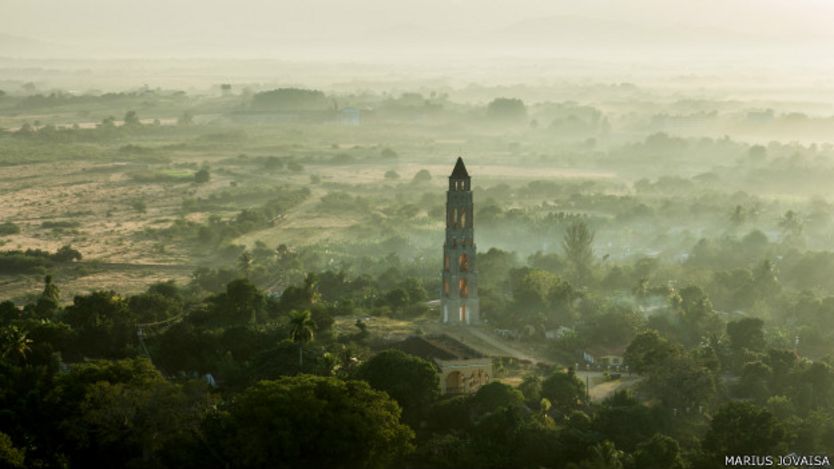
    La mayoría de sus fotografías las tomó al amanecer o al atardecer. "Quería conseguir un efecto especial", dice. Y lo consiguió en esta foto del Valle de los Ingenios, en la zona central de la isla. Este valle fue uno de los centros de producción de azúcar más importantes en los siglos XVIII y XIX.
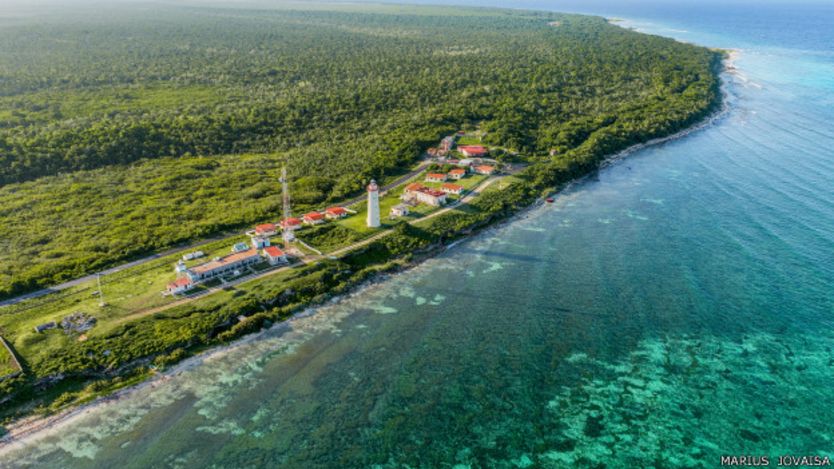
    Su libro ha sido publicado por el momento en inglés, pero él espera que una editorial lo traduzca pronto al español. Aquí una imagen del faro de Roncali, construido en 1850 en el Cabo de San Antonio, extremo occidental de Cuba.
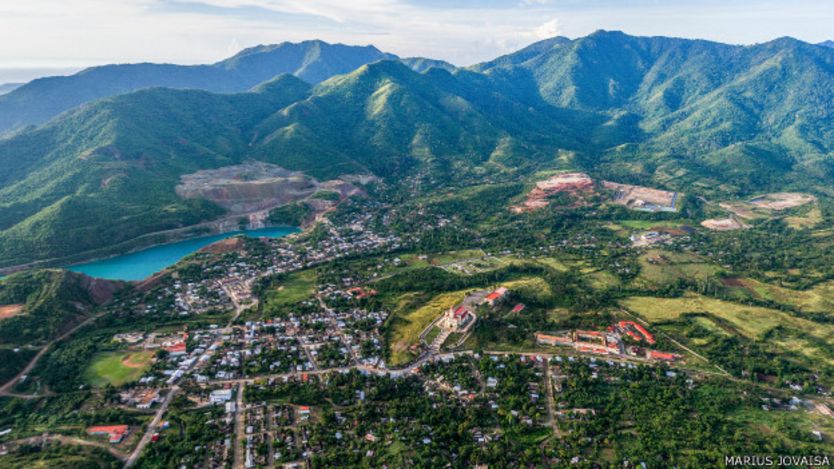
    A unos 20 kilómetros al noroeste de Santiago de Cuba se encuentra el lugar más sagrado para los cristianos cubanos, la Basílica de Nuestra Señora del Cobre, en la ciudad del Cobre.
    El fotógrafo acabó cumpliendo un sueño que le pareció imposible y se quedó con un gran recuerdo de la isla y de su gente. "Me enamoré de Cuba", dice Jovaiša.
    http://www.bbc.co.uk/mundo/video_fotos/2015/04/150409_fotos_ineditas_aereas_cuba_fp
    +